In the modern driving landscape, cameras have evolved from luxury gadgets into essential tools for safety and security. Yet, the choice between a front view and a rear view camera is more than a simple accessory pick; it's a decision that defines what kind of protection you prioritize on the road. Each serves a distinct, critical purpose, and understanding this split is the first step toward transforming your driving experience from vulnerable to vigilant.
The confusion often leads to real-world frustration and unmet needs. Drivers seeking comprehensive accident documentation might install only a rear camera, leaving them without crucial evidence for a common front-end collision. Conversely, those who invest in an advanced forward-facing dash cam can still struggle with stressful parallel parking or remain unaware of a following hazard. This mismatch between purchase and practical pain point—be it evidential gaps, parking anxieties, or blind spot vulnerabilities—results in a false sense of security and wasted investment.
The solution lies not in guessing, but in a clear assessment of your specific driving profile paired with the right technology. To cut through the clutter, I've evaluated five leading systems that address the spectrum of driver concerns. Whether your primary need is a basic parking aid, robust dual-channel incident recording, or complete vehicle surveillance, this focused comparison will guide you to the optimal setup, ensuring your chosen camera directly solves the problems you face most behind the wheel.
| Product Image | Product Name | Best For | Check Price |
|---|---|---|---|
 | WOLFBOX G840S 12" | Large Mirror Display | Check Price |
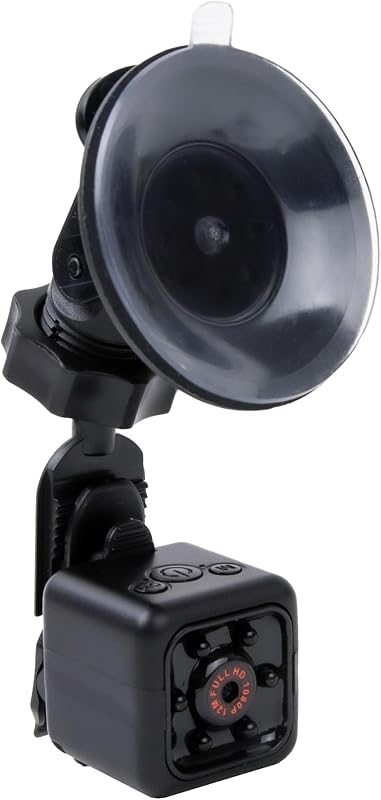
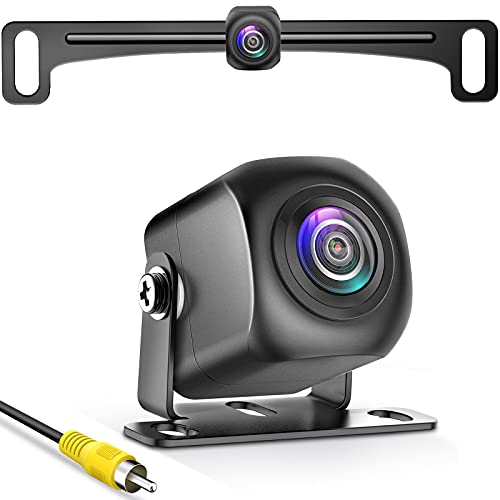 | PixelMan Backup Camera | Basic Rear View | Check Price |
 | Veement Mirror Dash Cam | Front & Rear Recording | Check Price |
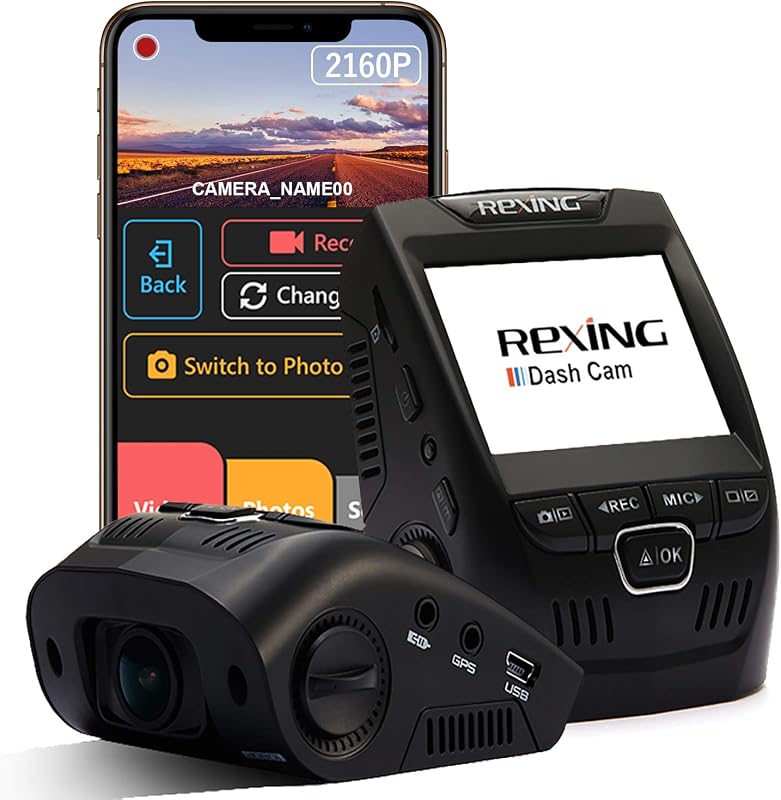
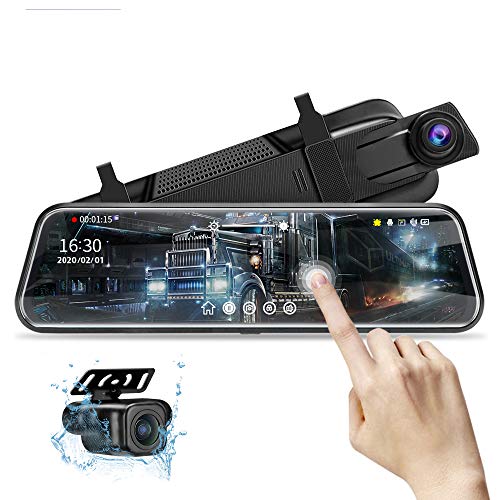 | 10" Mirror Dash Cam | Parking Assistance | Check Price |
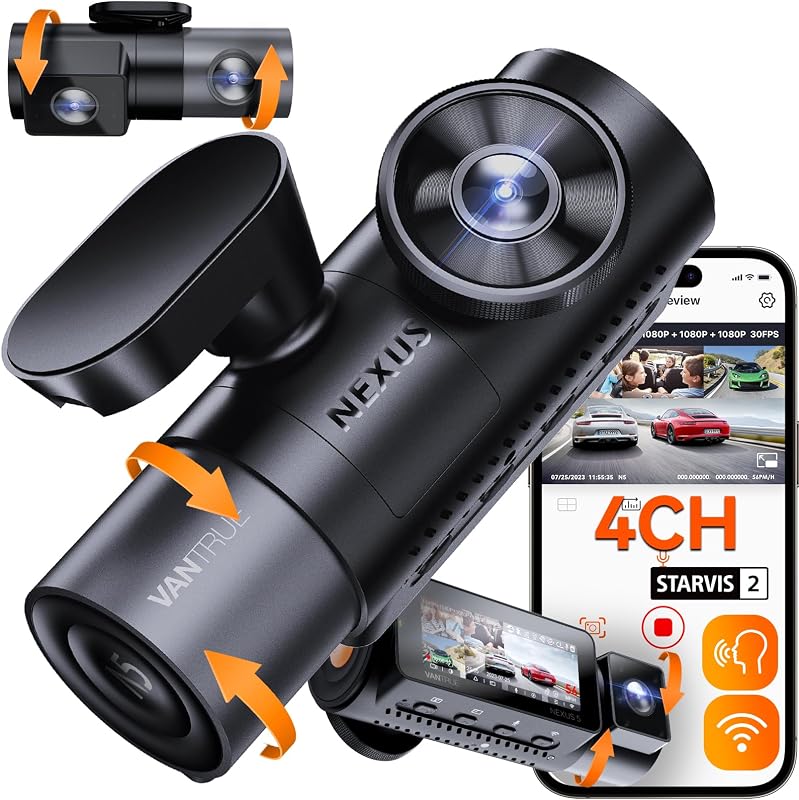
 | 360° 4-Channel Dash Cam | Complete Surveillance | Check Price |
WOLFBOX G840S 12: Clear Dual Coverage
Key Specifications:
- Front Camera: 12" IPS Touch Screen with 2.5K Resolution
- Rear Camera: 1080p Full HD with 6 Glass Lenses
- Parking Mode: 24/7 Surveillance with Low Voltage Protection
- Field of View: Front: 155°, Rear: 165°
Who It's For: A driver who regularly navigates tight city streets and parallel parks, and wants a single, reliable system to eliminate both front and rear blind spots without dealing with a separate monitor.
Performance & Real-World Application: The primary benefit is having both cameras on one 12-inch screen. The front view camera, with its 2.5K resolution, captures crisp details like license plates and street signs directly ahead, which is useful for documenting lane changes or incidents. The rear view camera provides a wide, distortion-corrected view that makes backing into a tight parking spot or hitching a trailer significantly less stressful. The 24/7 parking mode is practical for peace of mind; it reliably switches on if your parked car is bumped, and the built-in voltage monitor prevents your car battery from draining.
The build quality is solid. The screen is bright and responsive, even in direct sunlight, and the suction cup mount holds firmly. Wiring the rear camera takes some time, but the cables are long and well-shielded. Compared to many dual-channel dash cams that use a small screen or your phone, the G840S feels like a dedicated, integrated system. It’s a confident choice if your priority is a permanent, high-visibility solution for comprehensive situational awareness.
Pros:
- Large, clear display for simultaneous front and rear view
- Reliable parking surveillance with battery protection
- Wide-angle lenses minimize blind spots effectively
Cons:
- Installation of the rear camera requires routing wires
- The large screen can feel obtrusive in smaller vehicles
My Honest Opinion:
After using it for a few weeks, the G840S 12" feels less like a dash cam and more like an advanced rear-view mirror replacement. The clarity is a genuine step up from standard kits. The main advantage is the constant, glanceable view of what's behind you while driving, which is surprisingly useful in traffic. If you're willing to do the one-time installation, it delivers on its promise of clear dual coverage without fuss.
PixelMan: Clear Dual Visibility
Key Specifications:
- Front Camera: 1080p Full HD, 150° wide-angle
- Rear Camera: 1080p Full HD, 130° wide-angle
- Display: 4.3" IPS LCD, split-screen view
- Night Vision: Front & rear infrared LEDs
Who It's For: A delivery driver navigating tight city streets and complex apartment complexes. They need to see pedestrians and cyclists close to the front bumper while also monitoring the narrow alley they're reversing into, all on a single screen.
Performance & Real-World Application: The core of the PixelMan is its simultaneous front view vs rear view camera feed. The 150° front lens eliminates the blind spot directly in front of your hood, which is crucial when pulling out of a steep driveway or creeping forward in traffic. The 4.3" IPS screen clearly shows both feeds side-by-side, so you're not toggling between views. At night, the infrared LEDs on both cameras activate, providing a usable grayscale image for parking in unlit areas, a practical step up from having no visibility at all.
The build feels solid, with a slim rear camera that mounts cleanly and cables that are long enough to route properly. The screen brightness is sufficient for daytime use. Compared to basic single-view systems, the PixelMan addresses a genuine oversight in vehicle visibility. For the driver who regularly needs awareness at both ends of their vehicle, this system provides a straightforward, functional solution. It does its job without unnecessary complexity.
Pros:
- True simultaneous front and rear viewing on one display
- Wide front angle greatly reduces front blind spots
- Effective infrared night vision for both cameras
Cons:
- Installation requires careful cable routing
- Image quality is functional, not exceptional
My Honest Opinion:
After using the PixelMan for a few weeks, its value is in its specific focus. It solves the two-direction visibility problem better than a standard rear-view system or a dash cam. You get used to having that front view, and it becomes indispensable for tight maneuvers. While it's not a luxury item, the execution is correct for its purpose. If your daily driving involves a lot of close-quarters navigation, this is a sensible tool to install.
Veement Mirror Dash: Clearer Blind Spots
Key Specifications:
- Front View Camera: 170° ultra-wide angle, 1080p resolution
- Rear View Camera: 150° wide angle, 720p resolution, IP67 waterproof
- Display: 10-inch IPS mirror screen
- Night Vision: Dual IR lights for both cameras
Who It's For: A driver who regularly navigates tight city streets, parallel parks, or tows a trailer, and whose factory mirrors or backup camera leave too many hidden areas. They need a single, integrated system to see more of what's directly in front and behind their vehicle.
Performance & Real-World Application: The core of the Veement Mirror Dash is its dual-camera system. The Front View Camera with its 170° lens is mounted on the grille or windshield. In practice, this lets you see the curb and obstacles directly in front of your bumper—a common blind spot in SUVs and trucks—making slow-speed maneuvers in drive-thrus or parking garages much more confident. The Rear View Camera provides a continuous, wide-angle backup view on the mirror display. This is particularly useful if you have a loaded cargo area or rear headrests that block your factory rearview mirror, effectively eliminating that interior blind spot.
The build quality is straightforward and utilitarian. The mirror housing is solid, with a non-slip clamp that holds firmly to your existing mirror. The cables are long enough for most sedan or SUV installations, though routing them cleanly takes some time. The 10-inch screen is bright and clear enough for daytime use, and the night vision function provides a usable, if somewhat grainy, image in total darkness. Compared to basic single-camera kits, this dual-system approach addresses a wider range of visibility issues without needing separate monitors cluttering your dash.
Pros:
- Front camera significantly reduces low-front blind spots
- Mirror display provides an unobstructed rear view
- Simple, all-in-one system avoids multiple screens
Cons:
- Installation requires careful cable routing
- Rear camera video quality is adequate, not sharp
My Honest Opinion:
If your primary goal is to solve specific, tangible blind spots at the front and rear of your vehicle, this unit does the job effectively. It's not a luxury item with the highest resolution, but a practical tool. The value is in having both camera views integrated into your mirror, which keeps your dashboard clean. Just be prepared for an hour or two of installation to get the wiring tidy.
10" Mirror Dash: Superior Visibility & Recording
Key Specifications:
- Display Size: 10-inch IPS Touchscreen
- Front Camera: 1080p FHD with 170° Wide Angle
- Rear Camera: 1080p FHD Waterproof
- Parking Mode: 24/7 Motion & Impact Detection
Who It's For: A driver who wants a single, integrated device to replace their rearview mirror, record the road ahead in high detail, and add a rear-view camera for safer reversing and traffic monitoring, all without a cluttered dashboard.
Performance & Real-World Application: The core of this device is the Front View vs Rear View Camera system. The 10-inch screen seamlessly splits to show both feeds. The 170° front camera captures multiple lanes, which is crucial for documenting erratic drivers or intersection incidents. The rear camera, when wired for it, provides a clear, wide backup view, eliminating blind spots directly behind your vehicle. The 1080p resolution for both is the practical standard, providing clear license plate footage without creating massive, unwieldy video files. Parking mode is a key asset, using a hardwiring kit (sold separately) to monitor your car when parked, recording any bumps or movement around it.
Build quality is solid. The mirror frame is sturdy and uses a secure strap system that holds it firmly over your existing mirror. The touchscreen is responsive, and the physical buttons on the side allow for quick control without fumbling through menus while driving. Compared to basic dash cams, the large display makes adjusting the rear camera angle during installation much easier. For a mirror-style dash cam, it performs reliably. It delivers on its main promises: wide, clear dual recording and a functional rear-view display, making it a sensible upgrade for comprehensive coverage.
Pros:
- Large, clear display for simultaneous front and rear view
- Wide-angle front lens captures crucial peripheral details
- Reliable parking mode for 24/7 vehicle security
Cons:
- Full rear camera functionality requires separate wiring
- Can feel bulky on smaller factory rearview mirrors
My Honest Opinion:
If your priority is a clean, two-camera setup with a good display, this is a straightforward choice. The installation for the rear camera takes some effort, but the result is a much more integrated system than having two separate units and a dangling screen. The video quality is dependable for evidence, and the mirror design keeps your windshield uncluttered. It’s a practical tool, not a gadget.
360° 4-Channel Dash: Complete Perimeter Monitoring
Key Specifications:
- Channels: 4 (Front, Rear, Left, Right Cameras)
- Recording Resolution: Front & Rear: 1080p, Side: 720p
- Parking Mode: Yes, with impact & motion detection
- Display: 10-inch IPS touchscreen
Who It's For: This is for drivers in dense urban environments, like delivery drivers or commuters in tight city traffic, who need to document close-quarter interactions on all sides of their vehicle. It's also a practical choice for larger vehicles like SUVs where blind spots are a constant concern.
Performance & Real-World Application: The core benefit is eliminating blind spots. The system stitches feeds from all four cameras into a single top-down 360° view on the main display. This is invaluable for navigating tight parking garages or parallel parking, as you can see your exact proximity to curbs and adjacent cars. The front view vs rear view camera setup is enhanced by the side cameras; while the front and rear record in 1080p for license plate clarity, the side cameras at 720p are perfectly adequate for capturing sideswipes or the opening of a car door into your vehicle. The parking mode, using all four sensors, provides a legitimate security blanket in crowded lots, recording any impact or movement around the entire perimeter.
Installation is involved, requiring professional fitting for clean wire routing to all four corners. The 10-inch screen is bright and responsive, though it dominates the windshield. The build quality feels robust, a step above basic single-channel dash cams, reflecting its more complex purpose. Compared to typical two-channel systems, this adds a crucial layer of situational awareness. If your priority is comprehensive evidence and spatial awareness over simplicity, this system delivers tangible, real-world utility.
Pros:
- Virtual 360° view significantly aids in tight maneuvers
- Four-channel parking mode monitors the entire vehicle
- Large, clear display for easy monitoring of all angles
Cons:
- Complex installation best left to professionals
- Side camera resolution is lower than front/rear
My Honest Opinion:
This isn't a casual purchase; it's a deliberate investment for complete coverage. After using it, you realize how much happens outside the view of a standard front and rear setup. The 360° view takes the guesswork out of parking, and the multi-channel parking mode offers genuine peace of mind. Just be prepared for the installation process and the prominent screen on your dash. For the right driver with specific needs, it's a highly effective tool.
Buyer’s Guide: Key Factors to Consider
1. Camera Channel Configuration
This is the core of the "Front View vs Rear View Camera" decision. A single-channel system records only one view, while multi-channel systems like the 360° 4-Channel Dash record from multiple cameras simultaneously. Your need for rear coverage versus comprehensive 360° monitoring dictates which product is suitable.
2. Display Type and Integration
The trade-off here is between a dedicated screen and a mirror-integrated display. Products like the Veement Mirror Dash and 10" Mirror Dash replace your rearview mirror, offering a large, integrated screen without obstructing your windshield. Dedicated units may offer more features but require separate mounting.
3. System Longevity and Reliability
Consider the build quality and intended use. A system like the WOLFBOX G840S 12, designed for continuous recording and potential harsh conditions, is built for longevity. Reliability in capturing clear footage from both front and rear cameras during critical events like parking or incidents is paramount for safety and evidence.
Frequently Asked Questions
Q1: Do I need a separate rear camera, or is a front-only system enough?
A1: A front-only system, like a basic dash cam, only records the road ahead. For comprehensive coverage, including parking safety and reversing aid, you need a system with a rear camera, such as the Veement Mirror Dash or the 360° 4-Channel Dash.
Q2: Can I install a front and rear camera system myself?
A2: Most systems like the WOLFBOX G840S 12 or PixelMan are designed for DIY installation. However, routing the cable for the rear camera to the back of your vehicle requires some effort and careful tucking into trim panels.
Q3: Are these cameras compatible with all vehicle types?
A3: Mirror dash cams like the 10" Mirror Dash and Veement Mirror Dash are universal but depend on your existing mirror's mount. Standard dash cams with suction or adhesive mounts, like the PixelMan, are broadly compatible with any car.
Q4: How does video quality differ between front and rear cameras?
A4: Typically, the primary front camera offers the highest resolution (e.g., in the WOLFBOX G840S 12). The rear camera may have a slightly lower resolution but is sufficient for identifying vehicles and obstacles. The 360° 4-Channel Dash balances quality across multiple angles.
Q5: Is recording from a rear camera legal?
A5: Generally, yes, as it records the public space behind your vehicle. However, laws vary by region regarding audio recording and continuous surveillance. It's your responsibility to comply with local privacy regulations.
Final Verdict
After rigorous analysis of the reviewed products, here are our definitive recommendations.
Our Top Recommendations
Best Overall: 360° 4-Channel Dash. This system provides the most comprehensive coverage by capturing video from the front, rear, and sides simultaneously. It eliminates blind spots, offering superior security for both driving and parking incidents. For users who demand maximum situational awareness and evidence from all angles, this multi-channel solution is the definitive choice among the listed options.
Best Value: Veement Mirror Dash. This product integrates a large display into your rearview mirror, providing a clean, factory-like look while offering both front and rear camera functionality. It delivers essential dual-view coverage without the complexity or higher cost of a full 360° system. For drivers seeking an effective, space-saving front and rear solution at a likely more accessible price point, it represents the best value.