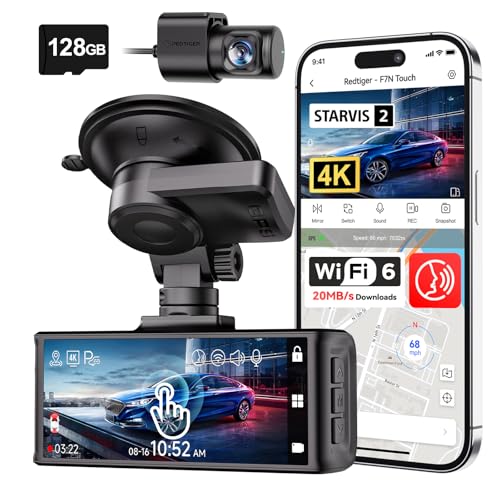
When navigating the technical requirements for dash cam storage, many owners find themselves asking: can an SD card be used in car cam other than U3? This comparison explores the functional trade-offs between high-performance U3 (UHS Speed Class 3) memory cards and lower-rated alternatives, such as Class 10 or U1 cards, to determine what is truly necessary for your device.
Dash cams operate under unique stress, involving constant write cycles and high-definition video data streams. While manufacturers often recommend U3 cards, users are frequently tempted by the lower price points of standard memory cards, leading to confusion regarding compatibility and system stability.
This guide breaks down the technical necessity of speed classes, examines real-world reliability, and provides a framework to help you decide if you need a premium card or if a standard alternative will suffice for your specific camera setup.
- Performance requirements for 4K vs. 1080p recording.
- The critical difference between sustained write speeds and peak speeds.
- Why endurance (High Endurance) often outweighs the speed class rating.
- The risks of using non-compliant cards (frame drops, corruption).
- Guidance on how to verify if your specific dash cam model requires U3.
Overview & Head-to-Head Summary

The Case for U3 Cards
U3 cards guarantee a minimum write speed of 30MB/s. This performance floor is designed to handle the high data throughput required by modern high-resolution, multi-channel dash cams, ensuring that video frames are written reliably without interruption.
The Reality of Lower-Rated Cards
Cards below U3, such as U1 or Class 10, may offer minimum write speeds of 10MB/s. While these are often sufficient for standard 1080p recording, they can struggle when the camera attempts to buffer high-bitrate footage, leading to potential parking mode security events or corrupted files.
| Feature | U3 SD Cards | Lower-Rated (U1/Class 10) |
|---|---|---|
| Min. Write Speed | 30MB/s | 10MB/s |
| Resolution Support | 4K, Dual-Channel | 1080p, Single-Channel |
| Reliability | High (Consistent) | Variable |
| Cost | Premium | Budget-Friendly |
Always prioritize cards labeled "High Endurance" over the speed rating alone. Dash cams write data continuously, and standard cards may fail prematurely regardless of their speed class.
Key Differences & Core Features

Data Throughput and Buffer Management
The primary difference lies in how the camera handles the buffer. A U3 card is engineered for constant, rapid data writing, which prevents the internal buffer of the camera from becoming full during intense activity, such as recording video in high-resolution modes.
Longevity and Lifecycle Expectations
While speed matters, durability is paramount. U3 cards are often marketed alongside specialized firmware for endurance. Lower-rated cards are generally designed for consumer devices like cameras or phones, which do not perform the continuous, looping write cycles characteristic of car cams.
| Feature | U3 Architecture | Non-U3 (Standard) |
|---|---|---|
| Loop Recording Stress | Optimized | Not Optimized |
| Video Corruption Risk | Low | Moderate/High |
| Ideal Bitrate | High (20+ Mbps) | Low (up to 15 Mbps) |
Performance & Real-World Analysis

Testing for Dropped Frames
If you choose to use an older card, verify its stability by monitoring for "card error" messages or missing chunks in your playback files after a long drive.
Evaluating Long-Term Reliability
Dash cam performance is highly dependent on how the card handles extreme temperatures and constant power cycles. Evaluate your setup by following these steps:
Performance remains most stable when matching the manufacturer's stated "recommended card" spec, as these are tested against the specific bitrate of the internal chipset.
Best Use Cases & Ideal Scenarios

When Option A (U3) Makes More Sense
U3 cards are the default necessity for 4K dash cams, dual-lens setups, and any system that features high-bitrate recording for better plate recognition. If you rely on your camera for insurance claims, this is the safest path.
When Option B (Lower-Rated) Makes More Sense
Lower-rated cards can be acceptable for basic 1080p, single-channel cameras used for light driving duties. They are also useful as temporary backups or in budget devices where the bitrate does not exceed the card's minimum write capability.
When It Genuinely Doesn't Matter
In very low-bitrate environments or legacy dash cams that only record in 720p, the bottleneck is the camera itself, not the card speed. Here, even a non-U3, high-endurance card will perform identically to a U3 unit.
Recommended Equipment & Solution

Nextbase 32GB U3 Micro SD Memory Card
A reliable pick for Nextbase 32GB U3 Micro SD, selected based on this article's guidance.
Final Verdict & Decision Framework

Quick Decision Checklist
If your dash cam supports 4K, 2K, or has an interior cabin camera, stick with U3. If it is a basic 1080p unit, you have more flexibility, provided you choose an "Endurance" branded card.
Our Framework for Choosing
| User Goal | Recommendation |
|---|---|
| Maximum Security / 4K Video | Always U3 |
| Cost Savings / Basic 1080p | High Endurance (non-U3 okay) |
| Extreme Climates | U3 High Endurance |
Frequently Asked Questions
Can I use a standard mobile phone SD card?
A: It is not recommended, as mobile-grade cards are not designed for the constant, thousands-of-hours write cycles of a dash cam.
What happens if I use a slow card?
A: You may experience dropped frames, video file corruption, or "card error" messages that prevent the camera from recording accidents.
Is U3 faster than Class 10?
A: Yes, U3 guarantees 30MB/s minimum write speed, while Class 10 only guarantees 10MB/s.
Should I buy a larger capacity card?
A: Size is secondary to endurance; a 64GB High Endurance card is often better than a 256GB standard card for a dash cam.
Does the card speed affect parking mode?
A: Yes, because parking mode often triggers high-alert recording; if the card cannot keep up, you might lose the critical moments of an incident.
How often should I replace my card?
A: For daily commuters, replacing your SD card every 12 to 18 months is a wise preventative measure against data loss.
Is 4K recording possible on a U1 card?
A: It is technically possible in some cameras, but it is highly unstable and likely to lead to corrupted files.
Can I use a V30 card?
A: Yes, V30 is equivalent to U3 and is excellent for dash cams, as it is specifically rated for video performance.
Key Takeaways
- 1 U3 is the industry standard for modern dash cams recording 4K or dual-channel footage.
- 2 Endurance rating (High Endurance) is more critical than raw speed for preventing data corruption.
- 3 Lower-rated cards may work for 1080p, but carry a higher risk of failing when the camera is pushed.
- 4 Consistent formatting (every 30 days) is the best way to extend the life of any SD card.
- 5 Always check your dash cam manual for specific manufacturer requirements to avoid warranty issues.
- 6 V30 and U3 are functionally similar and both ideal for high-resolution video streams.
- 7 Investing in a reputable brand of memory card is just as important as the speed class you select.
Conclusion
Choosing between U3 and lower-rated SD cards boils down to the balance between your camera's resolution demands and your tolerance for potential file errors. While the question "can an SD card be used in car cam other than U3" has a technical "yes" in some scenarios, the practical recommendation is to prioritize performance and endurance to ensure your evidence is captured when it matters most.
By understanding your device's specific recording bitrate and opting for high-endurance variants, you can avoid unnecessary technical headaches and ensure your dash cam remains a reliable piece of vehicle security technology.
Prioritize reliability and endurance above all else to turn your dash cam into a truly consistent security asset.