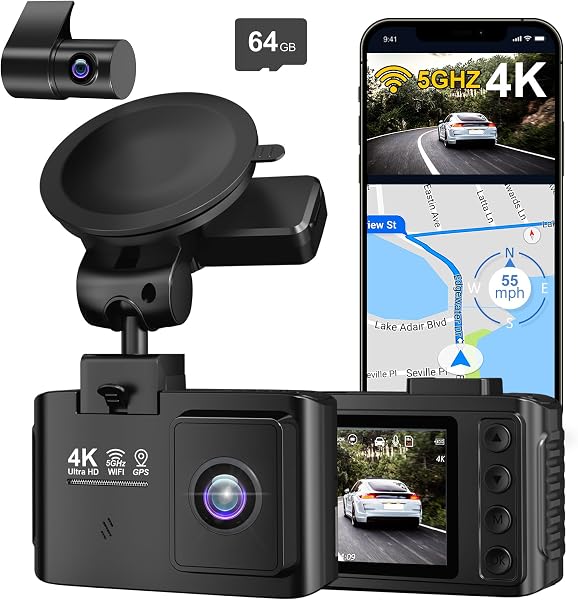
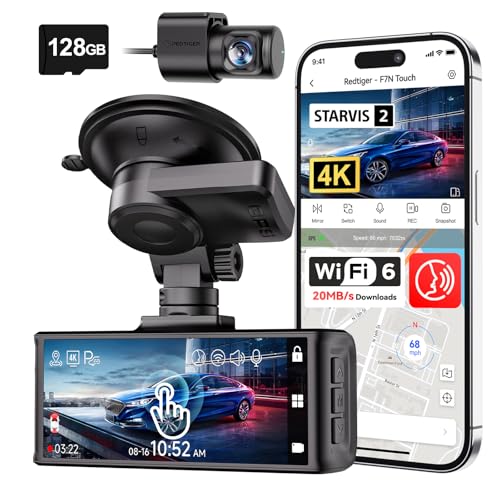
When evaluating your recording options, you may find yourself asking: can i buy a dash cam without using wifi? This dilemma pits traditional, screen-based dash cams against modern, app-reliant wireless models.
Many drivers are confused by the shift in the market, where "smart" features are often pushed as standard. While wireless connectivity offers convenience for cloud storage and instant sharing, it is not a requirement for the fundamental task of capturing high-quality road footage.
This guide analyzes the trade-offs between dedicated standalone cameras and Wi-Fi-enabled devices. By the end of this comparison, you will be able to decide which hardware approach aligns best with your privacy needs and technical preferences.
- Direct control vs. app-based interface
- Data privacy and local storage security
- Ease of initial setup and configuration
- Dependence on external software updates
- Compatibility with long-term parking surveillance
Overview & Head-to-Head Summary

Standalone (Non-Wi-Fi) Dash Cams
Standalone units operate entirely via physical buttons and built-in screens. They prioritize simplicity and data isolation, ensuring that video files never leave the local SD card without manual intervention.
Wireless (Wi-Fi) Enabled Dash Cams
These units utilize wireless signals to transmit data to a smartphone app. They are designed for users who want to view footage on a larger screen or quickly download clips to their mobile devices for immediate sharing.
| Feature | Standalone | Wi-Fi Enabled |
|---|---|---|
| Interface | Physical Buttons | Smartphone App |
| Privacy | High (No Remote Access) | Moderate (Network dependent) |
| Setup | Plug and Play | Pairing Required |
| File Transfer | Manual SD Card Swap | Wireless Download |
If you prioritize simple, consistent recording, many standalone models are better suited to operate reliably in 24/7 parking surveillance environments without network configuration issues.
Key Differences & Core Features

Data Management and Access
The primary architectural difference lies in how data is accessed. Standalone cams act as "dumb" storage devices, requiring a computer or reader to access files. Wi-Fi cams act as mini-servers, which adds convenience but introduces potential for connection drops.
Hardware Interface and Durability
Standalone cams often feature higher-quality physical screens and robust buttons designed for long-term use. Wi-Fi cams often omit the screen to save space, relying entirely on the phone app for live view and settings adjustments.
| Comparison Point | Standalone | Wi-Fi Enabled |
|---|---|---|
| Data Security | Offline/Secure | Network/App-dependent |
| Visual Feedback | Built-in Screen | Smartphone Interface |
| Update Process | Firmware via SD Card | Over-the-Air (OTA) |
| Reliability | High (Stable) | Variable (Connection dependent) |
For those looking for complex setups, understanding the nuances of wired vs. wireless data paths can clarify which system fits your vehicle interior best.
Performance & Real-World Analysis

Testing Data Integrity
Performance in dash cams is measured by the consistency of file writing. Non-Wi-Fi cams avoid the overhead of background network processes, which can sometimes interfere with high-bitrate recording.
Evaluating Long-Term Reliability
Over time, standalone devices tend to experience fewer "glitches" related to OS updates or app compatibility. When you evaluate these devices, focus on the stability of the loop recording function.
Performance remains optimal when the hardware is chosen based on the driver's ability to maintain the device; standalone cameras excel for "set it and forget it" users.
Best Use Cases & Ideal Scenarios

When Option A (Standalone) Makes More Sense
Choose a standalone dash cam if you value data privacy, work in a secure facility where wireless devices are restricted, or simply want a device that never requires an app update to function.
When Option B (Wi-Fi Enabled) Makes More Sense
Choose a Wi-Fi camera if you are an active user who wants to share clips instantly to social media or needs to review footage while on the roadside without a computer.
When It Genuinely Doesn't Matter
If you simply need a device to record accidents and never plan to review footage unless an emergency occurs, both systems function equally well provided you have a reliable SD card.
Recommended Equipment & Solution

Car Camera Dash Cam Front and Rear
A reliable pick for Car Camera Dash Cam Front, selected based on this article's guidance.
Final Verdict & Decision Framework

Quick Decision Checklist
Are you comfortable managing micro-SD cards? If yes, go standalone. Do you require real-time notifications on your phone? If yes, go Wi-Fi.
Our Framework for Choosing
| Priority | Recommendation |
|---|---|
| Privacy & Security | Standalone Dash Cam |
| Ease of Sharing | Wi-Fi Enabled Cam |
| Minimal Maintenance | Standalone Dash Cam |
Frequently Asked Questions
Can I buy a dash cam without using wifi?
A: Yes, many manufacturers still produce high-quality models that rely solely on buttons and screens.
Do non-wifi dash cams record in a loop?
A: Yes, loop recording is a fundamental feature present in almost all standalone dash cams, regardless of connectivity.
How do I view files on a non-wifi dash cam?
A: You simply remove the microSD card and insert it into a card reader on your computer or phone.
Are Wi-Fi dash cams less reliable?
A: They are not necessarily less reliable, but they introduce a "point of failure" regarding the software app and connection protocols.
Can I turn off Wi-Fi on a camera that has it?
A: Many models allow you to disable Wi-Fi, but you should verify this in the settings menu before purchasing.
Do standalone cameras support parking mode?
A: Yes, many support parking mode via hardwire kits, independent of any wireless functionality.
Is it safer to use a non-wifi dash cam?
A: For those concerned about data privacy and potential hacking, a non-wifi unit provides a clear, physical air-gap for your data.
Will I lose features by avoiding Wi-Fi?
A: You will lose the ability to perform instant cloud backups and remote live-viewing, which are the main trade-offs.
Key Takeaways
- 1 Standalone dash cams prioritize privacy by remaining disconnected from external networks.
- 2 Wi-Fi enabled models provide convenience for rapid file sharing but depend on smartphone app stability.
- 3 You can buy a dash cam without using wifi; they remain a standard, reliable choice for many drivers.
- 4 Loop recording functions identically on both types of hardware.
- 5 Always check if your non-wifi camera allows manual firmware updates via a memory card.
- 6 Physical interfaces on standalone units often last longer than software-based app interfaces.
- 7 Your choice should depend on whether you prioritize "instant sharing" or "set-and-forget" reliability.
Conclusion
Deciding whether to buy a dash cam without Wi-Fi comes down to your personal workflow. If you prefer a device that works autonomously without the need for periodic app updates or network pairing, standalone hardware is the superior choice. If you enjoy the modern convenience of checking your camera's angle or downloading clips from your smartphone, a Wi-Fi-enabled model will serve you better.
Regardless of your choice, ensure the camera supports your specific recording requirements, such as parking mode or high-resolution night footage.
Selecting the right dash cam ultimately ensures you have reliable evidence available whenever you need it, with or without a wireless connection.
Learn more about optimizing your power supply for long-lasting recording.