Utilizing a car with camera on roof setups provides unique 360-degree coverage, and this guide shares 10 actionable tips to maximize your recording efficiency. Whether for security, documentation, or creative capture, understanding how to deploy roof-mounted hardware is essential for optimal performance in 2026.
These tips are designed to help you navigate mounting constraints, cable management, and environmental factors to ensure your footage remains clear and your equipment stays secure during transit.
Tip 1: Secure Mounting Hardware

Choosing the Right Roof Rail Adapter
Ensure your car with camera on roof system uses a heavy-duty vacuum suction or bolt-on rail mount. Relying on basic adhesives often fails due to high-speed wind drag.
Verifying Mount Tension
Before every trip, perform a physical pull-test on your camera assembly. Even minor shifts at 60mph can cause severe image blurring or equipment damage.
Tip 2: Optimal Wiring Routes

Sealing the Entry Point
When running wires into the cabin, use high-quality rubber grommets to prevent water leaks. Learn more about Do dash cams record when the car is off? Everything You Need to Know for 24/7 Security to ensure your power source remains active.
Avoiding Door Jambs
Route cables along existing roof trim channels rather than through door seals to prevent cable fraying over time.
Tip 3: Vibration Dampening Strategies

Using Silicone Washers
Install silicone or rubber washers between the camera bracket and the metal mount to absorb high-frequency road vibrations.
Stabilizing the Armature
Shorten the extension arm of your mount to reduce the lever effect, which typically amplifies car with camera on roof vibrations.
Tip: If your footage remains shaky, consider adding a secondary support bracket to create a triangular anchor point.
Tip 4: Lens Protection and Maintenance

Hydrophobic Coatings
Apply a thin layer of hydrophobic glass treatment to the camera lens cover to prevent water beading during rain. This keeps your view clear without manual intervention.
Routine Lens Inspection
Check the housing for micro-scratches caused by road debris kicked up by other vehicles at highway speeds.
Recommended Equipment & Solution

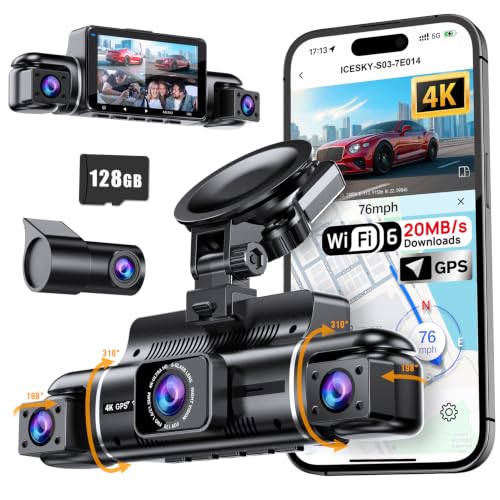
360 View 4 Channel Dash Cam Front
A reliable pick for 360 View 4 Channel Dash, selected based on this article's guidance.

Zelvoro Triple Strong Suction Cup Camera Car
A reliable pick for Zelvoro Triple Strong Suction Cup, selected based on this article's guidance.
Tip 5: Battery Longevity Considerations
Monitoring Voltage Draw
Ensure your system is optimized for long-duration recording. Review 5 Best Spare Dash Cam Battery Options for Long-Lasting Parking Mode to prevent unexpected power drops during operation.
Heat Management
Roof-mounted gear is exposed to direct sunlight; ensure your internal battery or capacitor is rated for high-temperature automotive environments.
Tip 6: Weatherproofing Your Setup
IP Rating Verification
Ensure your car with camera on roof unit has an IP67 rating or higher. This confirms the device can withstand rain, dust, and automated car washes.
Applying Dielectric Grease
Apply a small amount of dielectric grease to all external power connections to prevent oxidation and moisture ingress.
Warning: Never use standard household tape to waterproof connections, as the adhesive will break down under UV exposure, leaving sticky residue and gaps.
Tip 7: Field of View Optimization
Adjusting Angle Height
Angle the lens slightly downward to capture both the road surface and the horizon, providing the best perspective for incident reconstruction.
Field of View Comparison
| Lens Type | Advantage | Ideal Use |
|---|---|---|
| Wide-Angle | Broad coverage | General road surveillance |
| Standard | Reduced distortion | Specific lane monitoring |
Tip 8: Discreet Cable Management
Tucking Cables Under Seals
Use plastic prying tools to tuck cables into headliner seams. For more guidance on specialized mounting, read Baby Car Camera Mounting Tips: Secure Setup Guide 2026.
Securing Excess Slack
Bundle excess wire inside the roof lining to prevent wind noise or slapping against the interior during high speeds.
Tip 9: Nighttime Visibility Calibration
Adjusting Exposure Settings
If your car with camera on roof system supports manual ISO or exposure, slightly increase it for nighttime capture, but be wary of blooming from streetlights.
Checking Infrared Reflectance
Test if your lens cover creates glare from infrared LEDs at night by monitoring a test stream in a dark garage.
Success: Using a polarizing filter on your lens effectively eliminates reflections from the car roof itself, resulting in much cleaner night footage.
Tip 10: Legal Compliance and Privacy
Following Local Regulations
Always ensure that your roof camera does not obstruct your vehicle's height clearance or violate privacy laws regarding recording people in public spaces.
Signage and Awareness
In certain jurisdictions, if your vehicle acts as a mobile surveillance unit, you may need visible decals to remain compliant with regional data privacy laws.
Common Mistakes to Avoid
Frequently Asked Questions
Can a roof camera withstand car washes?
A: Generally, yes, provided it is rated IP67 or IP68. However, it is safer to remove it to prevent brush damage.
Does a roof mount increase drag?
A: Slightly, but for most passenger cars, the impact on fuel efficiency is negligible. Ensure the mount is aerodynamic to minimize noise.
Is it legal to record on public roads?
A: In most regions, recording from a vehicle in public is legal, but you must respect local privacy expectations.
How do I prevent thieves from taking the camera?
A: Use high-strength adhesive mounts or locking bolt systems that require specialized tools for removal.
Can the camera record 24/7?
A: Yes, if you have a hardwire kit connected to your car battery. You must ensure you have a battery monitor to prevent dead starters.
Do I need specialized software?
A: Most systems come with proprietary apps, but standard video players work for exported files.
What is the best angle for roof cams?
A: A 15-degree downward tilt is standard for capturing the license plates of vehicles in front of you.
Does winter weather affect recording?
A: Cold can reduce battery life in lithium-based cameras. Use capacitor-based models for better extreme-temperature performance.
Key Takeaways
- 1. Prioritize high-quality mounting hardware to handle wind speed and vibration.
- 2. Always use rubber grommets for any wires passing through the vehicle exterior.
- 3. Use silicone washers to dampen road vibrations that distort footage.
- 4. Apply hydrophobic coatings to keep lenses clear during rain and grime.
- 5. Regularly check your IP rating to ensure total weatherproofing.
- 6. Use polarizing filters to eliminate glare and reflections from your roof.
- 7. Review legal guidelines regarding mobile recording to ensure full compliance.
Summary
Setting up a car with camera on roof requires attention to detail regarding structural integrity, weather protection, and cabling. By following these steps, you can achieve professional-grade results while keeping your equipment safe and secure.
For more deep dives into advanced setups, check out How Does Baby Car Camera Work? Top 5 Systems for 2026 Reviewed for insight into modern sensor technology.
Maintaining a consistent monitoring routine ensures your equipment is ready when you need it most.