Finding the optimal places to mount dash cam in vehicle hardware is critical for both legal compliance and recording clarity. When considering where to place your device, you are essentially choosing between two primary zones: center-windshield mounting near the rearview mirror or offset mounting on the driver-side or passenger-side edges.
Many drivers struggle to determine the ideal location because they must balance a clear field of vision with the need to avoid obstructing their line of sight. Improper placement can lead to "fish-eye" distortions or legal issues regarding distracted driving, making the decision between a central or offset position far more important than it appears.
This guide analyzes the technical and practical trade-offs of these two mounting locations. By the end, you will understand which position best aligns with your vehicle's interior layout and your safety priorities for daily operation.
- Field of view coverage requirements
- Legal restrictions and local regulations
- Obstruction of the driver's sightline
- Accessibility for manual button operation
- Impact on specialized driver-assist cameras
Overview & Head-to-Head Summary

Center-Windshield Mounting
Positioning a dash cam behind the rearview mirror is the industry-standard approach. It places the lens as close to the vehicle's centerline as possible, minimizing horizontal distortion and capturing a balanced view of both the left and right sides of the road.
Offset (Side) Mounting
Offset mounting involves placing the unit to the left or right of the rearview mirror cluster. This is often chosen to accommodate bulky sensors or to ensure the driver has easier physical access to the device's manual controls and status lights.
| Feature | Center Mount | Offset Mount |
|---|---|---|
| View Balance | Excellent | Good (Slightly skewed) |
| Visibility | Hidden by Mirror | Potentially Obstructive |
| Control Access | Difficult | Easy |
| Sensor Interference | Low | Possible |
Before committing to a permanent adhesive mount, always check if your vehicle's lane-departure or rain-sensing hardware occupies the space behind your rearview mirror. Learn more about integrating 24/7 security with your chosen placement.
Key Differences & Core Features

Visual Coverage and Distortion
The primary technical difference lies in the lens geometry. A center mount provides a symmetric view, which is vital for identifying lane markings and vehicle positions accurately during an accident reconstruction. An offset mount will naturally favor one side of the road, potentially obscuring details on the far periphery.
Interior Ergonomics and Physical Access
If you frequently manually save clips or toggle settings, a center-mounted camera might prove frustrating. Conversely, an offset mount places the unit within reach, but it may also create a larger visual "blind spot" for the driver, depending on the camera's size and shape.
| Metric | Center Mount | Offset Mount |
|---|---|---|
| Lens Distortion | Minimal | Moderate |
| Driver Distraction | Low | Higher |
| Ease of Removal | Difficult | Simple |
| Legal Alignment | High Compliance | Variable |
For those interested in additional monitoring, ensure your placement doesn't conflict with other equipment like a specialized baby car camera system.
Performance & Real-World Analysis

Evaluating Field of View Consistency
When determining where to place your unit, you must account for how the lens angle interacts with the dashboard curvature. A perfectly centered camera captures the maximum width of the road, whereas an offset camera may capture too much of the hood or the A-pillar on one side.
Optimizing for Safety and Stability
Vibration is a key factor in footage quality. Mounting directly to the windshield or a stable mirror stalk is superior to suction-mounting on a plastic dashboard. Reliability is further improved if you pair your setup with reliable power solutions.
Position for Vision: Sit in your normal driving position. Mark the spot where the camera housing blocks the least amount of your forward view.
Test Lens Clearance: Power on the camera and check the live feed on a phone app to ensure no internal objects, like the mirror itself, are cropping the frame.
Secure Cables: Use cable clips to route the power wire along the headliner and A-pillar to ensure the mount remains under zero tension.
Testing the mount temporarily with painter's tape before applying permanent adhesives is the most effective way to ensure performance consistency.
Best Use Cases & Ideal Scenarios

When Center Mount Makes More Sense
The center mount is best for drivers who want a "set it and forget it" solution. It is the gold standard for insurance evidence and is less likely to be considered a visual obstruction by law enforcement.
When Offset Mount Makes More Sense
Choose an offset mount if your rearview mirror housing is extremely large or if your vehicle has a high concentration of sensors in the center of the windshield that would interfere with the camera lens.
When It Genuinely Doesn't Matter
If your dash cam features a remote lens or a very wide 170-degree field of view, the exact mounting position within a few inches of the center has a negligible impact on the overall footage utility.
Recommended Equipment & Solution
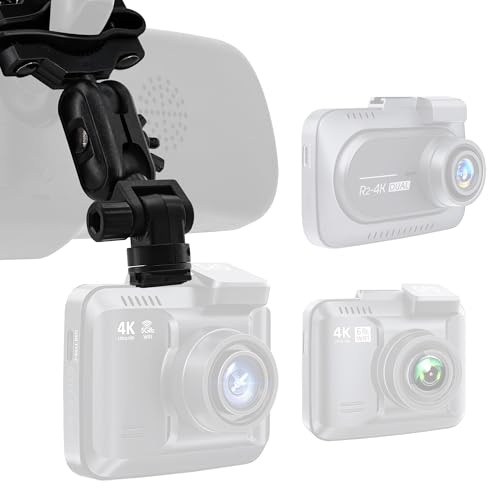
Triplinger Dash Cam Mount for Rove R2-4K
A reliable pick for Triplinger Dash Cam Mount, selected based on this article's guidance.
Final Verdict & Decision Framework

Quick Decision Checklist
If your vehicle has the space, prioritize the center of the windshield. If that area is occupied, move slightly to the passenger side to keep the driver's side field of vision clear and distraction-free.
Our Framework for Choosing
| Your Priority | Recommendation |
|---|---|
| Max Footage Accuracy | Center Mount |
| Frequent Manual Usage | Offset Mount |
| Aesthetic Minimalism | Center Mount |
| Vehicle Has Sensor Suite | Offset Mount |
Frequently Asked Questions
Can I mount a dash cam on the dashboard?
A: Yes, but it is generally discouraged due to increased vibration and a higher risk of the unit sliding or melting in direct sunlight.
Is it illegal to mount a dash cam in the middle of the windshield?
A: Most regions allow it as long as the device does not obstruct the driver's primary line of sight; always check your local vehicle code.
Does the camera angle affect my legal protection?
A: A centered camera provides a better perspective of lane position, which can be critical in proving which driver crossed the lane markers in an accident.
Will the camera interfere with my rain sensors?
A: Yes, placing a dash cam directly over rain sensors can cause them to malfunction by blocking the infrared signals they emit.
How do I reach the buttons if I mount it behind the mirror?
A: Most modern cameras offer smartphone apps that allow you to change settings and download clips wirelessly, rendering physical button access less critical.
Should I mount the camera low or high on the windshield?
A: Mounting high is preferred as it captures a better view of the road and avoids the dashboard glare that can occur with low-mounted units.
What if my car has a heated windshield?
A: Heated windshields may have specific areas (often near the mirror) designated for electronic toll tags or sensors; try to mount your camera in these zones to avoid signal interference.
Can I switch from a suction mount to an adhesive mount later?
A: Yes, most manufacturers sell replacement adhesive kits if you decide to make your temporary suction-cup setup permanent.
Key Takeaways
- 1 Center mounting offers the most balanced, legally robust footage.
- 2 Offset mounting is a practical necessity in vehicles with large mirror assemblies.
- 3 Always ensure your mount does not obstruct your view of traffic signals or pedestrians.
- 4 Use app-based control to negate the need for frequent physical access to the device.
- 5 Avoid mounting over rain sensors or camera-based safety systems.
- 6 High windshield placement reduces dashboard glare and improves perspective.
- 7 Temporary testing with tape prevents permanent mistakes on your windshield glass.
Conclusion
Selecting the best places to mount dash cam in vehicle hardware requires a careful balance between video coverage and driver safety. While the center of the windshield is the gold standard for recording symmetry, your vehicle's specific layout might dictate an offset approach.
Regardless of where you mount your device, ensure it is secure, stable, and does not interfere with your concentration. By following the steps outlined above, you can create a reliable, high-performance monitoring system that works exactly when you need it.
Prioritize a location that keeps the camera stable and the road clear, and you will achieve a setup that serves you reliably for years to come.