When navigating the 24 Hour Car Security Camera — Best 24/7 Dash Cams for Parking & Night Vision vs Alternatives landscape, owners must choose between dedicated dash cam systems and general-purpose home security adaptations for their vehicle surveillance.
The confusion often stems from the variety of power management styles, recording triggers, and privacy concerns that differentiate a permanent automotive setup from makeshift solutions. Choosing the wrong system can lead to battery drainage or insufficient evidence gathering when you need it most.
This guide breaks down the technical requirements of dedicated parking mode dash cams versus alternative setups. By the end, you will be able to determine which surveillance architecture aligns with your vehicle's power capacity and your specific security needs.
- Power source requirements and battery protection.
- Storage capacity vs. recording duration.
- Low-light performance and sensor sensitivity.
- Installation complexity and vehicle integration.
- Cost of ownership and privacy considerations.
Overview & Head-to-Head Summary

Dedicated 24/7 Dash Cam Systems
These devices are engineered specifically for the automotive environment, featuring built-in g-sensors and specialized "parking modes" that trigger recording upon impact or motion, while managing low power consumption to protect your vehicle battery.
Alternative Surveillance Options
Alternative setups often involve repurposing portable cameras or wireless security modules. While flexible, these often lack the deep integration with the vehicle’s electrical system, requiring external battery packs or manual maintenance.
| Feature | Dedicated Dash Cam | Alternative Solutions |
|---|---|---|
| Power | Hardwired to Fuse Box | External Power Banks |
| Activation | Auto-Trigger (G-Sensor) | Continuous or Manual |
| Ease of Use | Set and Forget | High Maintenance |
| Reliability | High (Automotive Grade) | Variable |
For those looking to transition between vehicles, refer to Transfer My Dash Cam To Another Car: The Ultimate Step-by-Step Guide to understand the installation trade-offs.
Key Differences & Core Features

Architectural Design and Power Management
The primary difference lies in power management. A dedicated camera uses a hardwire kit to monitor voltage, shutting off before your battery dies. Alternatives often require manual power management, risking a dead car battery if left unattended.
Data Storage and Privacy Standards
Dedicated systems are designed for the high heat cycles of a car interior. Alternatives may suffer from hardware failure in extreme temperatures. For those prioritizing discretion, Offline Dashcam: Why Going Off-Grid is the Best Choice for Privacy offers critical insights.
| Feature | Dedicated System | Alternative |
|---|---|---|
| Heat Resistance | High (Industrial) | Low (Consumer) |
| Loop Recording | Automatic | Limited |
| Video Quality | Optimized for Night | Variable |
Performance & Real-World Analysis

Evaluating Sensor Reliability
The effectiveness of a 24-hour setup depends on the G-sensor sensitivity. If it is too low, you miss events; too high, and the memory card fills with false positives.
Thermal Management in Parking Mode
A camera in parking mode generates consistent heat. Automotive-grade cameras use capacitors instead of lithium-ion batteries to prevent swelling and failure in direct sunlight.
Consistent performance is achieved when your system is hardwired to a constant power source with an integrated voltage cutoff monitor.
Best Use Cases & Ideal Scenarios

When Option A Makes More Sense
Dedicated systems are ideal for long-term owners who want a "set-and-forget" solution that guarantees their vehicle is protected while parked at work or overnight.
When Option B Makes More Sense
Alternative solutions are suited for rental cars, temporary setups, or users who prioritize complete data ownership without any cloud connectivity.
When It Genuinely Doesn't Matter
For short-term parking in secure garages, the difference between these systems is negligible, as external threats are minimized and battery drain is less of a concern.
Recommended Equipment & Solution

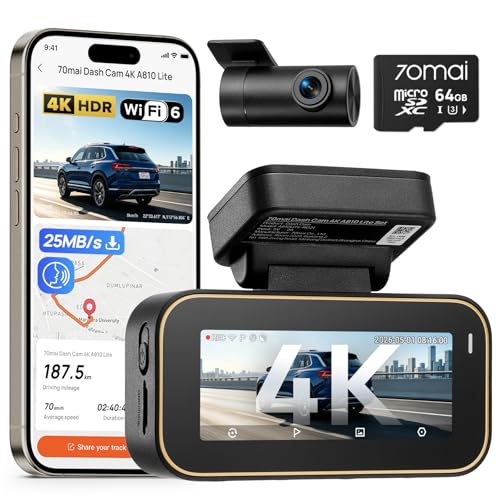
PRUVEEO 360° 4 Channel Dash Cam Front
A reliable pick for PRUVEEO 360° 4 Channel Dash, selected based on this article's guidance.
Final Verdict & Decision Framework

Quick Decision Checklist
Does your vehicle stay outside often? Is it parked in high-risk areas? If yes, invest in a dedicated automotive system. If you only drive occasionally and have garage storage, an alternative may be sufficient.
Our Framework for Choosing
Base your decision on your comfort with electrical installations and your requirement for automated safety features versus manual flexibility.
| Priority | Recommended Path |
|---|---|
| Safety/Automation | Dedicated Dash Cam |
| Flexibility/Cost | Alternative/Portable |
Frequently Asked Questions
Will a 24-hour dash cam drain my car battery?
A: Most modern hardwired dash cams include a voltage cutoff feature that stops recording if your battery drops below a specific safe threshold.
Do I need professional installation for these systems?
A: While basic models are easy to mount, professional installation is recommended for hardwired kits to ensure the electrical system is not compromised.
Are wireless alternatives reliable?
A: They are prone to connection drops and require manual power source replenishment, making them less reliable for security than hardwired cameras.
How much storage do I need for 24/7 recording?
A: It depends on the resolution, but a 128GB or 256GB high-endurance card is typically recommended for 24-hour loops.
Is night vision effective in low light?
A: Yes, look for cameras with Sony Starvis sensors, which are designed to produce clear images in near-dark conditions.
Can I hide the wires?
A: Yes, most dash cams allow you to route wires along the headliner and pillars for a clean, professional aesthetic.
What is a G-Sensor?
A: It is an accelerometer that detects sudden impacts or movements, prompting the camera to lock and save that specific footage clip.
Do I need a screen on my dash cam?
A: No, many modern cameras use a mobile app for live viewing, which allows for a smaller, more discreet design.
Key Takeaways
- 1 Dedicated dash cams offer automated protection and battery management.
- 2 Alternatives provide flexibility but require manual maintenance.
- 3 Voltage cutoff is mandatory for preventing battery drain.
- 4 High-endurance storage cards are essential for 24/7 loop recording.
- 5 G-sensor sensitivity must be tuned to avoid false positives.
- 6 Thermal resilience is vital for cameras left in cars under direct sun.
- 7 Hardwiring is superior to auxiliary batteries for long-term security.
Conclusion
Choosing between a 24-hour security dash cam and alternative monitoring methods requires balancing your need for high-end protection against the desire for installation simplicity. For most drivers, a hardwired dedicated system provides the most peace of mind for vehicle security.
If you prefer a specific mounting style, ensure you verify your dash camera location using our Best Place To Put Car Camera: 2026 Mounting Guide to optimize your field of view.
Selecting the right 24-hour car security solution is an investment in both your vehicle's safety and your own long-term confidence.
📌 Pillar Resource: Read our complete complete 24 Hour Car Security Camera — Best 24/7 Dash Cams for Parking & Night Vision review for in-depth insights.