Understanding how to lengthen dash cam recording time is essential for drivers who rely on continuous surveillance for security and peace of mind.
This guide is designed for vehicle owners who have basic technical proficiency and wish to maximize their dash cam’s operational window. Whether you are dealing with frequent overwrites or limited battery life, this manual assumes you are ready to adjust settings and hardware to achieve longer recording durations.
By the end of this guide, you will be able to reconfigure your device settings, upgrade storage components, and implement hardware solutions to ensure your camera captures every critical moment during both driving and parking.
- Methods for optimizing internal storage efficiency.
- The role of resolution and frame rate in file size.
- Power management strategies for extended parking mode.
- Hardware upgrades that enable longer recording sessions.
- Systematic troubleshooting to prevent unexpected shutdowns.
Overview & Prerequisites

Required Tools and Knowledge
To begin, you will need access to your dash cam’s mobile app or onboard menu, a high-endurance microSD card, and potentially an external power source or hardwire kit. Familiarity with your vehicle’s fuse box layout is beneficial if you choose to install a permanent power solution.
Who This Guide Is For
This tutorial is tailored for users who find their current recording duration inadequate. If you are curious about the mechanics of extended power, Do dash cams record when the car is off? Everything You Need to Know for 24/7 Security provides vital background on vehicle power states.
Always verify your dash cam's maximum supported storage capacity in the manual before purchasing a larger memory card to ensure compatibility.
Core Concepts & Fundamentals

Data Compression and Storage Cycles
Dash cams function by writing video files in a loop. To lengthen recording time, you must either increase the capacity of the container (the SD card) or decrease the size of the data being written (lower resolution or higher compression). Understanding this balance is key to preventing premature file overwriting.
Power Management and Buffered Recording
Recording duration is often limited by power. Many modern systems use "Parking Mode" to save space by only recording when motion is detected. For reliable continuous monitoring, consult 5 Best Spare Dash Cam Battery Options for Long-Lasting Parking Mode to understand how external power banks can extend your runtime.
| Feature | Short Recording Duration | Optimized Duration |
|---|---|---|
| Resolution | 4K @ 60fps | 1080p @ 30fps |
| Card Type | Standard SD | High-Endurance SD |
| Power Source | Internal/Cigarette Lighter | Hardwire/Dedicated Battery |
Step-by-Step Execution Guide

Configuration Phase
Power Optimization Phase
Recommended Equipment & Solution

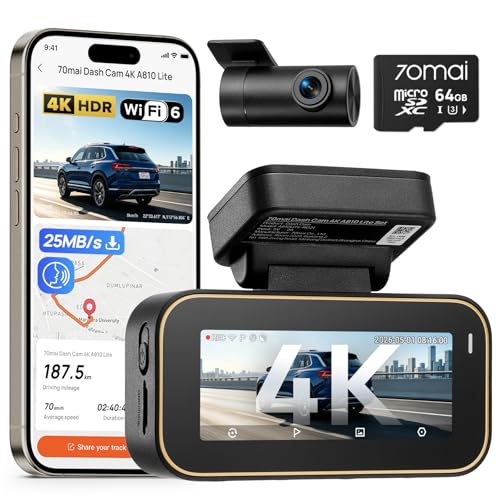
Car Camera Dash Cam Front and Rear
A reliable pick for Car Camera Dash Cam Front, selected based on this article's guidance.

Navycrest 4K Dash Cam Front and Rear
A reliable pick for Navycrest 4K Dash Cam Front, selected based on this article's guidance.
Best Practices & Pro Tips

Routine Maintenance and Verification
Storage cards degrade over time. Reformatting your card once a month is a best practice to ensure the file system remains error-free and efficient. Additionally, verify that your camera's firmware is updated, as manufacturers often release patches that improve power management efficiency.
Environment and System Longevity
Troubleshooting & Common Pitfalls

Diagnosing Power Failures
If your camera shuts down unexpectedly, check the voltage cutoff setting on your hardwire kit. If it is set too high, the device will cut power prematurely to save the car battery. For additional guidance on monitoring your setup, see Can baby car cameras see in the dark: Safe Nighttime Travel for tips on troubleshooting visibility and power issues in similar hardware.
Correcting Write Errors
Frequently Asked Questions
Does a higher-capacity SD card always increase recording time?
A: Yes, provided your camera’s firmware supports that specific capacity. Always check the official documentation to ensure the file system (usually exFAT) is compatible.
Will lowering resolution reduce recording quality significantly?
A: While clarity decreases, 1080p is usually sufficient for license plate identification in most traffic conditions. High-quality sensors often perform better at 1080p than cheap sensors do at 4K.
Can I use a power bank to extend battery life?
A: Yes, many dash cams can run off standard USB power banks. However, ensure the power bank supports pass-through charging if you intend to leave it connected permanently.
What is the most common reason for short recording time?
A: The most common reason is the use of non-high-endurance memory cards or inefficient video settings like 4K 60fps, which consume massive amounts of space.
Is hardwiring necessary for 24/7 recording?
A: It is highly recommended. Hardwiring provides a constant, stable power source that is much more reliable than the vehicle's accessory port.
How often should I reformat my microSD card?
A: It is recommended to format your SD card every 30 days to clear out file fragmentation and maintain optimal write speeds.
Why does my camera stop recording when parked?
A: If it stops immediately, the power supply likely cuts off with the ignition. If it stops after a few minutes, it may be due to a battery protection cutoff setting.
Are there legal implications for long-term recording?
A: Always check your local laws regarding vehicle recording, as some jurisdictions have specific requirements for recording public spaces or people without consent.
Key Takeaways
- 1 Lower resolution settings to extend the total time captured on your media.
- 2 Invest in high-endurance microSD cards to handle constant rewrite cycles.
- 3 Hardwire your camera to access constant power for parking surveillance.
- 4 Use H.265 compression if your device offers it to save storage space.
- 5 Reformat your memory card monthly to prevent file system errors.
- 6 Enable motion-detection mode to minimize redundant file storage.
- 7 Always verify your device’s maximum capacity before upgrading your SD card.
Conclusion
Lengthening your dash cam’s recording time is a balancing act between data management and power reliability. By optimizing your camera settings, choosing the right storage hardware, and securing a constant power supply, you can ensure your vehicle is monitored whenever you need it most.
Consistency is the secret to a stress-free dash cam experience. Regular maintenance of your SD card and verification of your power settings will prevent data loss and keep your evidence secure.
With these adjustments in place, your dash cam will provide the continuous, reliable security coverage you require on the road.