
When upgrading your vehicle security, deciding between a diy battery pack for dash cam parking mode and a purpose-built commercial external battery is a critical first step. While both methods aim to provide consistent power for surveillance when the ignition is off, they differ significantly in complexity, reliability, and initial assembly requirements.
Many drivers struggle to determine whether the cost-savings of a home-built lithium-ion setup outweigh the safety and "plug-and-play" convenience of a dedicated dash cam power bank. The variance in technical expertise required and the long-term maintenance of the cells are often overlooked during the research phase.
This guide evaluates these two approaches side-by-side, analyzing safety profiles, installation difficulty, and sustained performance. By the end, you will understand which power solution aligns with your technical comfort level and security goals.
- Technical expertise required for safe assembly
- Integration with vehicle electrical systems
- Safety protocols and thermal management
- Cost of individual components versus pre-packaged units
- Long-term maintenance and battery cycle life
Overview & Head-to-Head Summary
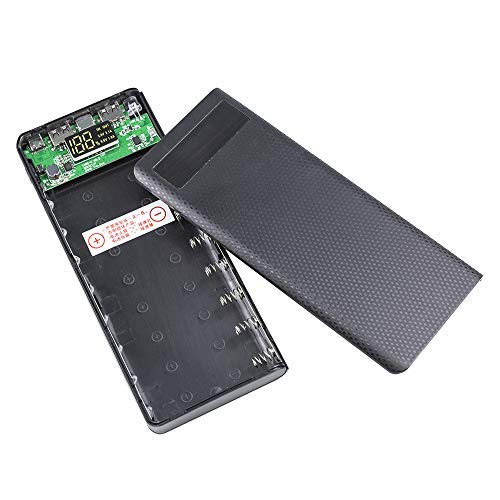
The DIY Approach: Custom Power Banks
A diy battery pack for dash cam parking mode typically involves sourcing high-discharge lithium-ion or LiFePO4 cells, a battery management system (BMS), and a buck converter to regulate output voltage. This method offers total control over capacity, allowing users to build a pack suited to their specific recording duration needs.
The Commercial Approach: Dedicated Dash Cam Batteries
Commercial units are sealed, pre-engineered power banks designed specifically for automotive environments. They often include advanced features like built-in temperature sensors, quick-charge circuitry from the cigarette lighter port, and standardized connections that minimize installation errors.
| Feature | DIY Battery Pack | Commercial Battery |
|---|---|---|
| Installation | High Complexity | Plug-and-Play |
| Safety | Dependent on User Skills | Certified/Regulated |
| Cost | Lower (Component-based) | Higher (All-inclusive) |
| Reliability | Variable | High |
Before proceeding with any electrical installation, ensure you understand the risks of hardwiring, which we cover in our guide on how to hardwire a dash cam.
Key Differences & Core Features

Architectural Complexity and Safety
The primary difference between these options lies in the design architecture. A diy battery pack for dash cam parking mode requires a deep understanding of circuit protection. Without a high-quality BMS, overcharging or short-circuiting can lead to thermal runaway. In contrast, commercial units arrive in protective, vibration-resistant enclosures designed to withstand extreme automotive interior temperatures.
Financial and Maintenance Trade-offs
Financially, the DIY route is enticing due to the lower cost of raw cells. However, when factoring in the cost of high-grade connectors, housing, and labor time, the gap narrows. Commercial batteries also offer clear warranties and support, whereas DIY solutions provide no recourse if a component fails prematurely.
| Criteria | DIY Battery Pack | Commercial Battery |
|---|---|---|
| BMS Integration | Manual Implementation | Factory Integrated |
| Enclosure | Custom/User-Sourced | Automotive Grade |
| Warranty | None/Component only | Manufacturer Support |
| Voltage Stability | Requires Precision Tuning | Consistent/Regulated |
For those interested in how these power solutions impact specific features like sound recording, review our post on do dash cams record audio.
Performance & Real-World Analysis

Evaluating Energy Density and Discharge Rates
Performance in a parking mode scenario relies on the battery's ability to maintain steady voltage under fluctuating temperatures. A diy battery pack for dash cam parking mode can be optimized for higher capacities, but consistent performance depends heavily on the quality of cells chosen.
Predictability in Harsh Conditions
Commercial batteries are generally tested for "cycling," meaning they are engineered to withstand the daily deep discharge common in parking mode. When testing your setup, consider the following evaluation steps:
Understanding battery life on dash cam hardware is essential for ensuring your parking mode doesn't cut out prematurely.
Best Use Cases & Ideal Scenarios

When Option A Makes More Sense
The DIY battery approach is ideal for electronics enthusiasts who have experience with soldering, spot-welding battery tabs, and working with BMS configurations. If you require a non-standard capacity or wish to integrate the battery into a larger custom vehicle electrical project, this is the superior route.
When Option B Makes More Sense
Commercial units are best for drivers who want peace of mind. If you are not comfortable managing lithium-ion safety risks or if you want a system that comes with a warranty and proven safety ratings, a commercial dash cam battery is the professional choice.
When It Genuinely Doesn't Matter
If your dash cam has a low-power "time-lapse" parking mode and you only drive short distances, the difference in total capacity may be negligible, making either option a valid choice depending on your budget.
Recommended Equipment & Solution
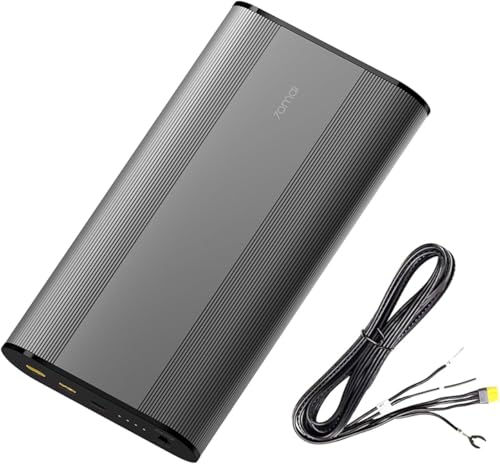
70mai Dash Cam Battery Pack BL96NNX, Hardwire
A reliable pick for 70mai Dash Cam Battery Pack, selected based on this article's guidance.

Blackvue Dash Cam Battery Pack B-130A,12V/24V Battery
A reliable pick for Blackvue Dash Cam Battery Pack, selected based on this article's guidance.
Final Verdict & Decision Framework

Quick Decision Checklist
Ask yourself: Do I have the specialized tools (like a battery spot welder) to assemble a safe pack? If no, the commercial option is strongly recommended for your safety.
Our Framework for Choosing
Match your goal to the solution below:
| Priority | Recommended Solution |
|---|---|
| Max Cost Savings | DIY Battery Pack |
| Maximum Safety | Commercial Battery |
| Custom Capacity | DIY Battery Pack |
| Plug-and-Play/Support | Commercial Battery |
Frequently Asked Questions
Is a DIY battery dangerous?
A: It carries risks if handled improperly. Lithium-ion batteries can be volatile if they lack a high-quality Battery Management System (BMS) and proper thermal protection.
How long does a commercial battery last in parking mode?
A: It varies by camera power consumption, but many systems offer between 12 to 24 hours of recording time on a single charge.
Can I use a standard power bank for my dash cam?
A: Not recommended. Most consumer power banks lack the temperature resistance required for car interiors and cannot handle constant charge/discharge cycles well.
Do commercial dash cam batteries charge while driving?
A: Yes, they are designed to charge via the car's accessory (cigarette lighter) socket or via hardwire kit while the engine is running.
Is the DIY approach actually cheaper?
A: In raw parts, yes. However, when you include the cost of safety equipment, proper housings, and your time, the savings are often smaller than people expect.
What is the best battery chemistry for these packs?
A: LiFePO4 (Lithium Iron Phosphate) is generally preferred for automotive applications due to its superior safety profile and cycle life compared to standard Li-ion.
Do I need special tools to build a pack?
A: Yes, a spot welder is standard for creating a reliable pack, along with multimeter skills for voltage monitoring.
Which option is better for privacy?
A: Both are identical; the privacy factor depends on the dash cam itself, not the power source.
Key Takeaways
- 1 DIY setups provide custom control but require high technical expertise.
- 2 Commercial units offer safety certifications essential for automotive use.
- 3 BMS implementation is non-negotiable for lithium-based DIY packs.
- 4 Evaluate the total power draw of your dash cam before selecting capacity.
- 5 Commercial batteries are better for long-term reliability and warranty support.
- 6 Temperature resilience is the most critical factor for vehicle-based power storage.
- 7 The "best" choice depends entirely on your mechanical skill set and budget availability.
Conclusion
Choosing between a DIY battery pack and a commercial solution boils down to a trade-off between technical autonomy and professional peace of mind. A DIY battery pack for dash cam parking mode is an excellent project for those who understand the nuances of electronics, but it is not recommended for those without specific experience in battery safety.
For the average driver, the reliability and safety certifications of a purpose-built commercial battery make it the safer, more dependable choice for long-term use. Regardless of your choice, ensure your dash cam system is configured correctly to maximize the efficacy of your parking mode surveillance.
Selecting the right power source is the final step in creating a truly set-and-forget security system, so choose the path that offers the most reliability for your specific driving habits.


