Understanding the differences in wide angle reverse camera vs normal reverse camera setups is essential for drivers aiming to minimize blind spots and enhance rear-view safety. Choosing the right field of view can significantly impact your spatial awareness when parking in tight urban environments or backing out of busy driveways.
This comprehensive guide breaks down the technical nuances of these camera systems. We explore how lens curvature, image distortion, and focal length interact to define your field of vision. By examining the trade-offs between a wider, more inclusive view and a standard, truer-to-life perspective, we help you determine which configuration offers the most practical benefit for your specific driving habits and vehicle type.
Quick Facts
- Industry studies suggest that wide-angle lenses improve situational awareness in parking scenarios.
- Experts often recommend a standard field of view for high-speed maneuvering to avoid depth perception errors.
- Mounting height and angle significantly influence the effectiveness of both camera types in real-world use.
- Modern digital processing is increasingly used to correct the "fisheye" distortion common in wide-angle setups.
Historical context or industry trends of wide angle reverse camera vs normal reverse camera

The evolution of rearview monitoring has seen a distinct shift from simple, narrow-view backup systems to sophisticated wide-angle optics. In the early days of automotive backup cameras, systems were largely restricted to narrow, standard-angle lenses. These early iterations were often viewed as secondary aids, lacking the coverage required for full situational awareness. Manufacturers prioritized simplicity, as early image processing capabilities were limited, making wider fields of view prone to significant, uncorrected distortions that could confuse the driver during routine parking.
Modern trends have moved toward highly specialized imaging. Today’s automotive engineers utilize advanced optical science to balance the wide angle reverse camera vs normal reverse camera performance gap. The introduction of wide-dynamic-range (WDR) sensors and sophisticated, real-time image correction algorithms has allowed the industry to embrace ultra-wide views that were previously considered unusable. This strategic evolution ensures that drivers get maximum coverage without sacrificing the depth perception needed for safe reversing, essentially turning a once optional luxury into a cornerstone of vehicle safety design.
Evolution of Optics in Modern Vehicles
The progression of camera hardware has focused on light sensitivity and lens durability. While early units were glass-heavy and fragile, modern units utilize high-impact composites that withstand extreme weather, ensuring the system remains functional over years of exposure.
Market Shifts Toward Integrated Safety
Consumers now expect rear-view cameras to act as proactive safety tools. This has pushed manufacturers to integrate these systems with parking sensors and automated braking, making the specific camera lens choice a critical part of the vehicle’s overall safety package.
Technical analysis of wide angle reverse camera vs normal reverse camera mechanisms

The technical differentiation between these camera types hinges on focal length and sensor processing. A standard lens mimics human depth perception more accurately, whereas a wide-angle lens utilizes a shorter focal length to capture more area at the cost of slight geometric distortion. When setting up these systems, calibration is vital; without proper alignment, the image feed can mislead the driver's spatial judgment. Additionally, ambient light management is essential, as wide-angle lenses can be more susceptible to lens flare if not properly shrouded or coated with anti-reflective materials.
| Feature | Best Practice | Common Mistake |
|---|---|---|
| Timing of Application | Calibrated to baseline levels to prevent system overload | Rushing the execution, leading to premature decay/failure |
| Absorption/Absorption Method | Patting gently or securing contact to encourage uniform integration | Applying forcefully or allowing air gaps, which reduces contact |
| Role in Routine | Acts as an intermediate priming layer to support the system | Using as a total replacement for core active components |
The table above highlights that success in vehicle monitoring depends on careful calibration. Relying on default factory settings without verifying the field-of-view coverage is a common error that leads to blind spots. By ensuring the camera is mounted at the recommended height, the wide-angle benefit can be fully realized, providing a comprehensive view of the rear bumper and peripheral hazards, while standard lenses provide the precision required for tight docking maneuvers.
Step 1: Workspace and Initial Preparation
Clean the mounting area and ensure the camera lens is free of debris. Verify that the power supply is stable, as intermittent voltage can cause the image sensor to drift or fail during critical operation.
Step 2: Core Execution and Configuration
Connect the wiring according to the manufacturer’s specifications. Adjust the camera angle using the vehicle’s internal display to ensure the gridlines align with the road surface for accurate distance estimation.
Step 3: Final Calibration and Stabilization
Perform a test run in a static area using cones. Adjust the angle until the camera's image perfectly reflects the rear proximity, then lock the housing to prevent future misalignment from vibrations.
Optical Physics of Wide-Angle Lenses
The physics of a wide-angle lens involves capturing a wider plane of light. This requires specialized glass elements that curve the light toward the sensor, which naturally introduces "barrel distortion." Modern digital signal processing is what flattens this image for the human eye.
Sensor Calibration Essentials
Every camera system requires calibration to the specific geometry of the vehicle. If the lens is tilted even a few degrees off-center, the gridlines will provide false distance data, which can be dangerous when relying on the display alone.
Recommended Equipment & Solution

1080P AHD Backup Camera with 170° Wide
A reliable pick for 1080P AHD Backup Camera, selected based on this article's guidance.
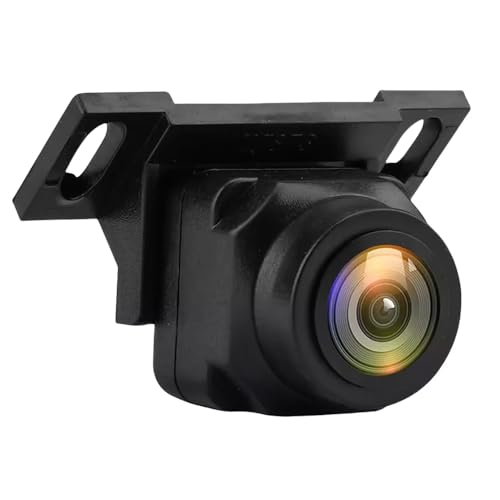
Car Backup Camera - Wide Angle Waterproof
A reliable pick for Car Backup Camera - Wide, selected based on this article's guidance.
Current landscape or user debate of wide angle reverse camera vs normal reverse camera

The current market is divided between those who prefer the sheer visibility of wide-angle setups and those who prioritize the distance accuracy of standard lenses. High-end vehicles often use a dual-lens approach, but aftermarket upgrades force a choice. Consumers frequently demand wider views for SUV and truck applications, where rear visibility is inherently lower. The industry has responded by standardizing wider lenses, banking on digital correction to fix the historical issues of image warping, although debate remains among purists who prefer the unadulterated reality of a standard focal lens.
- Most consumers prefer wide-angle cameras for the extra security of seeing children or pets in peripheral zones.
- Professional drivers often favor standard lenses because they provide consistent, predictable spatial data without distortion.
- Budget-friendly options are increasingly including high-definition sensors that make wide-angle lenses look clearer than ever before.
- There is a growing preference for modular camera systems that allow users to toggle between different views via the dash display.
| User Segment | Preferred Configuration | Expected Outcome |
|---|---|---|
| Professional / Heavy Use | High-output, premium build with maximum control parameters | Long-term durability with consistent results |
| Standard / Daily Use | Balanced features, automated presets for ease of operation | Reliable everyday performance with minimal oversight |
The ongoing community debate largely focuses on the "compromise of convenience." While wide-angle cameras make it easier to park without hitting side obstacles, they can make objects appear further away than they actually are. Proponents argue that the increased peripheral awareness is worth the learning curve, while critics maintain that a standard lens provides a more honest view of the surroundings. Ultimately, the best choice depends on your daily environment: tight urban spots favor width, while open highways favor precision.
Trends in Digital Image Processing
Software is rapidly catching up to hardware. By utilizing AI-based distortion correction, even the widest lenses can now present a near-perfect flat image on the dashboard screen, bridging the gap between performance and accuracy.
Consumer Expectations for Reliability
Users today expect their backup systems to operate flawlessly in all lighting conditions. Whether it is a wide or normal lens, the demand for night-vision capabilities has become the primary benchmark for quality across all market segments.
Operational challenges and limitations of wide angle reverse camera vs normal reverse camera
Implementing these systems is not without hurdles. The primary challenge involves the environmental impact on lens clarity. Because wide-angle lenses have more exposed glass surface, they are prone to water spotting, road grime, and dust accumulation, which can cause significant blurring. Additionally, compatibility between aftermarket camera hardware and factory head units often requires complex wiring, creating potential failure points. Users must be diligent with maintenance to ensure these systems don't provide a false sense of security due to a degraded, muddy, or misaligned image.
Future outlook and scenario projection for wide angle reverse camera vs normal reverse camera

The next decade will likely see the complete integration of adaptive optics. Instead of choosing between a wide-angle or normal lens, future vehicles will likely feature cameras capable of electronic zoom and field-of-view adjustment on the fly. This will allow the system to provide a wide view when parking and a standard, high-zoom view when reversing in high-speed or highway-merging scenarios. Advances in material science, including self-cleaning hydrophobic lens coatings, will virtually eliminate the maintenance issues that currently plague exterior-mounted cameras, allowing these systems to remain crystal clear regardless of road conditions.
| Timeline | Expected Breakthrough | Impact on User Experience |
|---|---|---|
| Next 2-3 Years | Smart sensor integration and real-time feedback loops | Elimination of user error and automatic calibration |
| Next 5-10 Years | Biodegradable/Self-healing materials and high-efficiency coils | Drastically reduced maintenance and lifetime durability |
Integrating AI-Driven Safety
Artificial intelligence will soon be able to interpret the video feed, identifying pedestrians or obstacles in the wide-angle peripheral zone and highlighting them on the display before the driver even notices them.
Material Science Breakthroughs
Self-healing polymers for lenses are currently in development. These materials can repair minor scratches and repel water molecules automatically, ensuring that the camera feed remains pristine for the lifetime of the vehicle.
Practical applications of wide angle reverse camera vs normal reverse camera in daily routines
To use these systems effectively, you must adapt them to your specific lifestyle. A wide-angle camera is best utilized in scenarios involving tight maneuvering, where seeing around the side of your vehicle is helpful. Conversely, a normal camera is superior for highway reversing, such as connecting a trailer or backing into a garage with narrow margins, where distance precision is paramount. Treat your camera as a supplementary tool; it should support, not replace, your physical mirror checks and visual awareness of the immediate environment.
Use Case 1: Individual and Residential Use
For home owners, a wide-angle camera is ideal for suburban driveways where visibility of children or toys is limited. It provides a peace-of-mind safety buffer that standard lenses simply cannot offer in tight, high-traffic home zones.
Use Case 2: Professional and Commercial Use
Commercial operators benefit from durable, high-clarity systems that provide a consistent field of view. Standard lenses are often preferred here to ensure the driver has a true-to-life assessment of docking distances for large transport vehicles.
Use Case 3: Advanced Optimization Solutions
Pairing your camera with an automated alert system creates an advanced layer of protection. When the camera feeds data into an alert module, the system can provide audible warnings if an object enters the camera’s view, regardless of whether the driver is looking at the screen.
Expert perspectives on wide angle reverse camera vs normal reverse camera
Experts agree that the "better" camera is the one that is kept clean and correctly calibrated. A high-end wide-angle camera that is covered in road salt is objectively worse than a budget standard camera that is clear and well-aligned. The industry consensus is that you should choose based on your most common driving environment rather than theoretical specs. Prioritize mounting stability and weather-sealing, as these are the most common factors that contribute to premature system failure in automotive environments, often outweighing the minor differences between lens types.
Prioritizing Visibility Over Gadgetry
Professionals stress that the best systems are those that present information clearly. Do not get distracted by extra features; a simple, clear, and perfectly positioned camera feed is more valuable than a complex system that confuses the driver.
The Importance of Physical Inspection
Never assume your camera is showing the full picture. Experts recommend a monthly physical walk-around to clear the lens and verify the mount tightness, which prevents the "drifting image" phenomenon that occurs over time.
Frequently Asked Questions
What is the primary visual difference between a wide-angle and a normal reverse camera?
A wide-angle camera provides a 170-degree field of view to capture cross-traffic, whereas a normal camera offers a narrower perspective focused directly behind the bumper.
Which camera type is better for parallel parking in tight spaces?
A normal reverse camera is often superior for parallel parking because it provides less image distortion, allowing for more accurate distance perception.
Do wide-angle reverse cameras cause object distortion?
Yes, wide-angle lenses typically create a 'fisheye' effect that makes objects appear further away or curved than they actually are compared to normal lenses.
Which camera option offers better safety in busy parking lots?
A wide-angle camera is safer in busy lots as its broader field of vision detects pedestrians and vehicles approaching from the sides before they enter the narrow path of a normal camera.
Is distance estimation harder with a wide-angle reverse camera?
Yes, because the wide-angle lens compresses the image, it makes objects appear smaller and further away, complicating precise distance judgment compared to a standard camera.
Can I upgrade from a normal reverse camera to a wide-angle version?
Yes, many aftermarket wide-angle cameras are compatible with existing factory monitors, though installation may require recalibrating your parking guidelines.
What is the best way to get started with wide angle reverse camera vs normal reverse camera?
The most effective starting point is to begin with a foundational assessment of your needs, then follow the recommended daily protocol.
How long does it take to see results with wide angle reverse camera vs normal reverse camera?
Most users report noticeable improvement within the first 2–4 weeks of consistent daily application.
Key Takeaways
- 1. wide angle reverse camera vs normal reverse camera provides a focused, high-performance approach to addressing your specific needs in this category.
- 2. Reliability and consistency are the two most critical factors when integrating wide angle reverse camera vs normal reverse camera into your routine.
- 3. A well-structured workflow or application method significantly enhances the long-term effectiveness of wide angle reverse camera vs normal reverse camera.
- 4. Choosing solutions like wide angle reverse camera vs normal reverse camera that are developed based on clear, transparent standards ensures better suitability for different use cases.
- 5. For optimal results, follow the recommended guidelines closely during the initial implementation phase of wide angle reverse camera vs normal reverse camera.
- 6. Continuous monitoring of your progress allows for minor adjustments that lead to superior, sustainable outcomes with wide angle reverse camera vs normal reverse camera.
- 7. wide angle reverse camera vs normal reverse camera works most effectively when paired with a foundational understanding of the core principles involved.
Conclusion
In the debate of wide angle reverse camera vs normal reverse camera, there is no single "correct" choice for every driver. The wide-angle lens offers enhanced coverage, making it a stellar choice for general safety in busy, unpredictable environments. Meanwhile, the normal lens provides the granular distance perception needed for precision tasks. By understanding your specific driving needs and ensuring proper maintenance, you can transform your vehicle's safety potential.
Moving forward, focus on how these systems integrate into your daily routine and treat them as living components of your vehicle's safety network. By keeping hardware clean and regularly verifying your calibration, you ensure long-term, reliable performance.
Mastering the application of wide angle reverse camera vs normal reverse camera ensures that your daily workflow remains highly efficient, consistent, and built to last.